Why Tokenised Stocks Are a Crypto Story – and What India Should Do About It
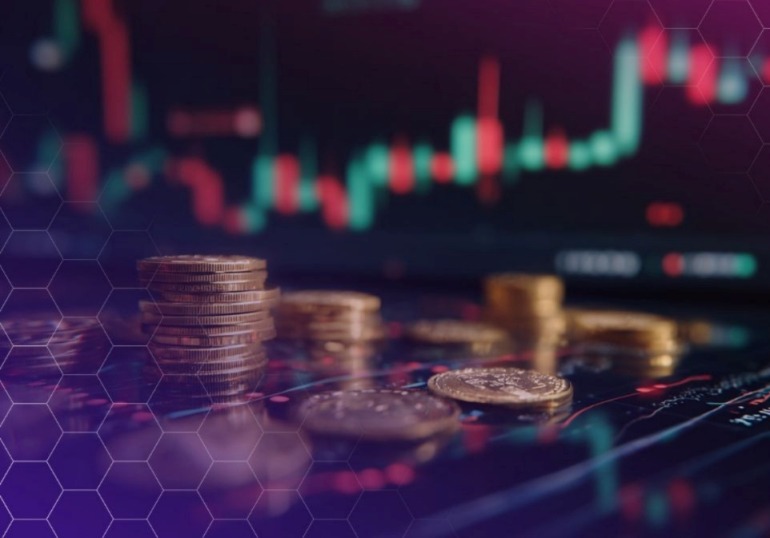
The way people buy and sell shares is starting to change, and the companies leading that change are not the traditional stock exchanges. Over the last year, crypto platforms such as Robinhood, Kraken and Bybit have started offering a new kind of product to investors outside the United States: tokenised US stocks. A tokenised stock is a digital version of a listed share, represented as a blockchain-based token that mirrors the value of a company such as Apple or Tesla. For every token issued, the actual share is held safely with a licensed custodian. The person holding the token gets the same benefits as someone holding the share directly, including the right to receive dividends. What is different this time is the technology being used to run these products. Instead of the closed systems used by banks, these tokens are being issued on open blockchain networks like Solana, Ethereum and Arbitrum. That single choice is what makes the whole idea work.
Open blockchains remove many of the operational constraints built into today's stock market infrastructure. Markets no longer have to operate only during exchange hours, and transactions no longer need to wait until the next business day to settle. Investors can purchase tiny fractions of expensive shares, even for just a few rupees. More importantly, tokenised stocks become programmable financial assets. A token representing Apple stock on Solana, for instance, can be pledged as collateral, swapped for a stablecoin—a digital asset linked to the value of a fiat currency such as the US dollar—or transferred across borders almost instantly. The conventional stock market simply does not allow this level of flexibility. Stablecoins make the payment process equally efficient. An investor in Mumbai, Singapore or Dubai can acquire tokenised US equities using stablecoins without depending on lengthy cross-border banking networks to access US dollars.
Market activity suggests there is strong demand for these products. Backed Finance's xStocks, launched on Solana through Kraken and Bybit in June 2025, recorded more than $300 million in trading volume within weeks of its launch. Robinhood's European platform now offers over 200 tokenised US stocks and exchange-traded funds on an Ethereum-based network. BlackRock has also embraced the model through BUIDL, its tokenised US Treasury fund, which crossed $2.5 billion in assets under management in 2025. That signals that blockchain-based financial infrastructure is attracting not only crypto-native firms but also some of the world's largest financial institutions. Earlier efforts built on private, bank-controlled networks failed to generate similar momentum because they largely recreated the traditional financial system instead of transforming it.
India appears to be moving along the same path. In mid-2025, SEBI approved a regulatory sandbox pilot for Xaults, an IIM Ahmedabad-incubated startup, enabling retail investors to buy fractional shares of Reliance Industries for as little as ₹10 while recording ownership on a distributed ledger at the depository level. The pilot is now being expanded to include additional companies as well as assets such as real estate. This demonstrates that the regulator sees tokenised securities as a credible area for experimentation. The next question is whether India should extend this approach by leveraging open blockchain networks, stablecoins and domestic Virtual Digital Asset (VDA) exchanges. The advantages are evident: markets that never close, near-instant settlement, investments starting from very small amounts and more efficient movement of capital. India's VDA exchanges already comply with the KYC and reporting requirements prescribed by FIU-IND, giving them a solid foundation to serve as trusted gateways for these products.
Crypto assets have not yet received formal recognition from either SEBI or the RBI, but developments elsewhere are becoming increasingly difficult to overlook. Every tokenised equity platform that has achieved meaningful adoption in 2025 has relied on open blockchain infrastructure and crypto exchanges for distribution. The blockchain rail is the feature that makes the model viable. At the same time, IFSCA's work on tokenising real-world assets provides India with an opportunity to begin building its own framework, while the country's VDA ecosystem already offers compliant infrastructure operating at scale. Viewing crypto rails as an enabling layer for tokenised securities—rather than treating them as a separate debate—would allow India to develop this market domestically instead of watching the next phase of financial innovation take shape elsewhere.